Tampilkan postingan dengan label elfata english college. Tampilkan semua postingan
Rabu, 24 April 2013
Jumat, 08 Maret 2013
phrasal verb
Apa itu Phrasal Verb?
1. Phrasal Verb adalah verb yang ditambahkan dengan preposisi sehingga mempunyai makna yang berbeda dari arti sebelumnya.
He ran away when he was 15. run + away = meninggalkan rumah
2. Beberapa Phrasal verb adalah intransitif. Kalimat intransitif tidak membutuhkan obyek
3. Beberapa phrasal adalah transitif. Kalimat Transitif dapat ditambahkan obyek.
4. beberapa phrasal verbs yang transitif dapat dipisahkan. Objeknya diletakkan diantara verb dan preposisinya.
5.Beberapa phrasal verb yang transitif tidak dapat dipisahkan. Objek diletakkan setelah preposisi.
6.Beberapa Phrasal Verb dapat dipisah atau tidak dipisah.
7. Hati - hati! Meskipun banyak Phrasal Verb yang objeknya dapat diletakkan baik di antara verb dan preposisi maupun sesudah preposisi, tapi untuk objek yang berupa kata ganti harus diletakkan setelah preposisinya.
Contoh :
I looked the number up in the phone book.
I looked up the number in the phone book.
I looked it up in the phone book. benar
I looked up it in the phone book. salah
1. Phrasal Verb adalah verb yang ditambahkan dengan preposisi sehingga mempunyai makna yang berbeda dari arti sebelumnya.
contoh :
I ran into my teacher at the movies last night. run + into = bertemu
He ran away when he was 15. run + away = meninggalkan rumah
contoh :
He suddenly showed up. "show up" tidak dapat ditambahkan objek
contoh :
I made up the story. "story" adalah objek dari "make up"
Contoh :
I talked my mother into letting me borrow the car.
She looked the phone number up.
I talked my mother into letting me borrow the car.
She looked the phone number up.
Contoh :
I ran into an old friend yesterday.
They are looking into the problem.
I ran into an old friend yesterday.
They are looking into the problem.
Contoh:
I looked the number up in the phone book.
I looked up the number in the phone book.
I looked the number up in the phone book.
I looked up the number in the phone book.
Contoh :
I looked the number up in the phone book.
I looked up the number in the phone book.
I looked it up in the phone book. benar
I looked up it in the phone book. salah
Jumat, 01 Maret 2013
catch - caught - caught
Present Simple
He catches the train at nine o'clock.
" Dia naik kereta pada jam 9"
Simple Passive
The ball is caught by the player at first base.
"Bola ditangkap oleh pemain pada base pertama"
Present Continuous
They are catching on slowly
"Mereka sedang mengejar ketinggalan degan lambat"
Present Perfect
He has caught a cold.
"dia masih flu"
Present Perfect Continuous
He will catch on fast.
"Dia akan menyusul dengan cepat"
Label:
belajar bahasa inggris,
eec,
elfata,
elfata english college,
english college,
gresik,
kursus bahasa inggris di gresik,
learn english online,
tense,
vocabularies
Kamis, 28 Februari 2013
bring - brought - brought
Bring - Brought - Brought
" membawa"
example sentencesPresent Simple
She often brings friends to work.
"dia sering 'mengajak' temannya ke kantor."
Present Simple Passive
Presents are brought to the reception.
"hadiah-hadiahnya dibawa ke depan"
Present Continuous
Mary is bringing Jack to the party.
"Mary sedang 'mengajak' Jack ke pesta"
Present Perfect
I haven't brought much food today.
"saya tidak membawa banyak makanan hari ini"
Present Perfect Passive
A number of books have already been brought back to the library.
"Beberapa buku telah 'dikembalikan' ke perpustakaan."
Past Simple
Alice brought a new friend to the party.
"Alice telah mengajak teman baru ke pesta"
Past Simple Passive
This contribution was brought by John.
Future (will)
Janice will bring the dessert.
"Janice akan membawa makanan penutup"
Future (will) passive
The dessert will be brought by Janice.
"makanan penutup akan dibawa oleh Janice"
additnal knowledge : other meaning for bring
- Take something or somebody with oneself somewhere
"Bring me the box from the other room"; "This brings me to the main point";
- convey, take
- Cause to come into a particular state or condition
"Long hard years of on the job training had brought them to their competence"; "bring water to the boiling point"
- Cause to happen or to occur as a consequence
"bring comments"; "The rain brought relief to the drought-stricken area";
- work, play, wreak, make for
- Go or come after and bring or take back
"Could you bring the wine?";
- get, convey, fetch
- Bring into a different state
- land
- Be accompanied by
"Can I bring my cousin to the dinner?"
- Advance or set forth in court
"bring charges";
- institute
- Provide a particular quality or character
"She brings a special atmosphere to our meetings";
- lend, impart, bestow, contribute, add
- Be sold for a certain price
"The painting brought $10,000"; "The old print brought in a high price at the auction";
- fetch, bring in
- Attract the attention of
"The noise and the screaming brought the curious"
- Induce or persuade
"The confession of one of the accused brought the others to admit to the crime as well" - bring it on
Label:
elfata,
elfata english college,
english college,
gresik,
kamus,
kursus bahasa inggris di gresik,
tense,
urutan waktu dalam bahasa ingris,
vocabularies,
word
Senin, 25 Februari 2013
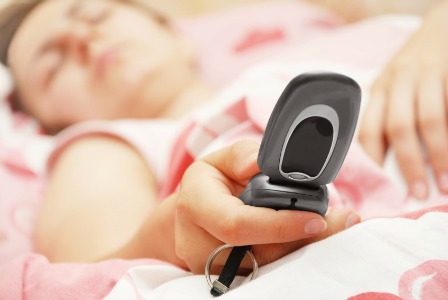
sleep texting disorder
If you have a smartphone, you may have felt the embarrassment of
sending a private message to the wrong person or having autocorrect fail
you at just the wrong time.
But some people
experience a different kind of messaging mishap, one they may not even
remember doing. And no, they're not drunk-dialing.
They're sleep-texting.
While hard data is
lacking on this cultural trend, the anecdotal evidence has been mounting
over the past few years. Twitter users regularly recount the loopy
messages they've sent with the hashtag #sleeptexting. "There are texts
sent from my phone at 5am that I do not recall sending," said one tweet.
Another said, "I should stop sleeping next to my phone."
Others post Twitpics and
Instagram photos showing their bizarre or garbled messages, some of
which are more gibberish than actual words. One woman told CNN affiliate WQAD last year that she had a sleep-texting disorder.
Whereas some people might
"get up and go get something out of the refrigerator" while in a state
of sleep, said Dr. Jim Fulop, the corporate medical director for
OhioHealth Sleep Services, others "grab their smartphone, which is right
next to them, and they may text or do other things."
The idea of unlocking a
smartphone, opening a texting app and then typing something while asleep
may sound far-fetched, but the "sleep-texting" term is a little
misleading. It's more like "half-asleep" texting, as doctors describe it
as a state of rest where a person isn't fully awake.
"It's like your brain is
on autopilot," explained Dr. Shelby Harris, director of behavioral sleep
medicine at Montefiore Medical Center in New York. "Think about the
rate at which people are texting nowadays, and most people sleep right
next to (their phones), so if they wake up it's another automatic
behavior. ... This is sort of a form of sleepwalking, that's kind of the
way that I look at it."
Unlike sleepwalking, which can be dangerous, sleep-texting tends to be a habit that can be easily laughed off.
Here are some other recent examples of sleep texts, as posted on Twitter and Instagram:
Fulop and Harris say
younger generations appear to be more susceptible to sleep-texting. For
young professionals, sometimes their jobs require them to respond to
texts and e-mails late into the night.
And teens, "they're
texting constantly," Fulop said. "They feel they can spend the middle of
the night communicating with their friends; it's part of their
behavior. ... They don't intend to text, but they sleep-text because
they wake up confused, they grab (their phone) and they're off mumbling
in the text message."
Dr. Elizabeth Dowdell, a
professor of pediatric nursing at Villanova University's College of
Nursing, heard the same thing as she was researching Internet risk
behaviors and the victimization of children and adolescents.
"I think for many
adolescents and young adults, technology has provided us another avenue
of sleep walking, (or) talking in our sleep. People have answered the
phone, the good old-fashioned landline, in their sleep.
That's not
particularly new," Dowdell said. "What we're seeing now is younger
people experiencing this."
Adults can typically
shrug off sleep-texting with a laugh or an apology, but there could be
greater consequences for adolescents. Texting is interrupting their
sleep at an age when they need it most, and they could be more
vulnerable to thier unintentional oversharing being posted for others to
see.
If you're a sleep texter
or afraid of becoming one, the easiest and best solutions are the most
obvious: Turn off your phone, set your passcode lock or place it on the
other side of the room so it's not within easy reach.
this article was taken from CNN.com
Kamis, 14 Februari 2013
Sabtu, 26 Januari 2013
Ten Expressions to give opinions - 10 cara menyatakan pendapat
1. It's common
knowledge that...
(semua orang tahu bahwa...)
2. It's a fact
(that)..
(berdasarkan fakta bahwa....)
3. Anyone will
tell you..
(semua orang berkata...)
4. Everybody knows
that...
(semua orang tahu bahwa...)
5. It's a
well-established fact that
( telah menjadi fakta yang ditetapkan bahwa...)
6. Few people
would deny that..
( sedikit orang akan menyangkal bahwa...)
7. It's no secret
that...
(bukan rahasia umum lagi bahwa....)
8. I think we can
all accept / agree that..
(saya rasa kita semua setuju bahwa...)
9. It is generally
assumed that...
(Secara umum diasumsikan bahwa...)
10. It has been
scientifically proven that...
(hal ini sudah dibuktikan secara ilmiah bahwa...)
How To Use These Phrases In Your English
1. In phrases 1,
2, 3, 4, and 5 the speaker is introducing ideas that everybody agrees are true.
Pada Frase 1, 2, 3, 4, dan 5 si pembicara mengungkapkan ide yang kebenarannya sudah diketahui banyak orang.
2. The other 5
phrases are a little less strong, saying that a few people might disagree, but
nearly everybody does agree with your statement.
(5 frase yang lain sedikit kurang kuat. dikatakan bahwa ada sedikit orang yang tidak setuju, tapi sebagian besar lainnya setuju.)
3. Phrases 1, 5, 6
and 10 are good opening phrases for a discursive essay. You can use one of
these phrases to establish the importance of the topic before introducing an
aspect of the topic that is not agreed.
Frase 1, 5, 6, dan 10 baik digunakan sebagai awalan untuk menjelaskan suatu masalah secara logis. Anda dapat menggunakan salah satu frase ini untuk menetapkan pentingnya topik sebelum topik itu disetujui atau disepakati..
4. Phrases 3, 4, 7
and 8 are often used in spoken discussions or debates.
Frase 3, 4, 7 dan 8 biasanya digunakan dalam diskusi atau debat.
5. Phrase 10 is
saying that somebody has done an experiment that proves your statement to be
true. If using this in writing you may want to refer specifically to scientist
or the experiment itself in your next sentence.
mengatakan bahwa seseorang telah melakukan percobaan yang membuktikan pernyataan anda. Jika menggunakan ini dalam menulis Anda mungkin ingin merujuk secara khusus untuk ilmuwan atau percobaan itu sendiri dalam kalimat berikutnya.
Selasa, 15 Januari 2013
Small Talk in English
"Small talk" means conversation
about things that aren't really very important, especially with people we don't
meet very often. You might use them at a party.
"Small talk" (basa-basi) berarti percakapan yang topiknya tidak begitu penting, percakapan ini kita lakukan dengan orang yang jarang kita temui. biasanya kita gunakan pada acara-acara tertentu dimana kita bertemu dengan banyak orang.
Ten Expressions for Speaking And Writing
1. You must be
Susan's husband.
( Anda pasti suaminya Susan.)
2. How's your wife
/ friend?
(Bagaimana kabar istri / teman Anda?
3. Nice weather,
isn't it?
(Cuaca hari ini bagus, bukan?)
4. What's new?
(Ada kabar apa?)
5. I haven't seen
you for ages.
(Sudah lama sekali saya tidak melihat Anda.)
6. What have you
been up to?
(Apa yang sedang Anda rencanakan?)
7. Are you still
working for the same firm?
(Apakah anda masih bekerja di perusahaan yang sama?)
8. Have you heard
from Jenny recently?
(Apakah anda tahu kabar Jenny akhir-akhr ini?)
9. What a
coincidence!
(wah, kebetulan sekali!)
10. Fancy meeting
you here!
(Senang kita bisa bertemu di sini.)
How To Use These Phrases In Your English
1. Phrase 1 is
used to introduce yourself to someone, when you think you know who the person
is.
( Frasa 1digunakan untuk memperkenalkan diri Anda kepada seseorang yang sepertinya Anda kenal.)
2. Phrase 2 is
used to ask the person you are talking to for information about someone close
to them.
(Frase 2 digunakan untuk menanyakan kabar seseoran yang dekat dengan lawan bicara.)
3. Phrase 3 is
used when you can't think of anything else to talk about. If the weather is
bad, you could say 'Rotten weather, isn't it?' instead.
(Frase 3 digunakan ketika Anda tidak menemukan topik untuk berbicara. Jika saat itu cuaca sedang tidak bagus, anda dapat menggunakan 'Rotten weather, isn't it?' (Cuaca agak tidak bagus, ya?)).
4. Phrases 4 and 6
are general enquiries, asking for news about a person. ( Frase 4 dan 6 adalah pertanyaan yang umum, digunakan untuk menanyakan kabar baru lawan bicara.)
5. Phrases 7 and 8
are more specific than 4 and 6, but are still enquiries for information.
(Frase 7 dan 8 lebih spesifik darpada frase 4dan 6, tetapi masih dalam general inquiry)
6. Phrase 5 has a
similar meaning to 4 and 6, but is expressed as a statement rather than a
question.
( Frase 5 mempunyai maksud yang sama dengan frase 4 dan 6, hanya saja lebih bersifat pernyataan daripda pertanyaan.)
7. Phrases 9 and
10 are used to express surprise when you meet someone you weren't expecting to
meet.
( Frase 9 dan 10 digunakan untuk menyatakan kegirangan Anda ketika bertemu seseorang yang tidak Anda sengaja sebelumnya.)
Langganan:
Postingan (Atom)